Home / Archives for January 2021
How Custom Edge Welded Metal Bellows can Solve your Cryogenic Sealing Challenges
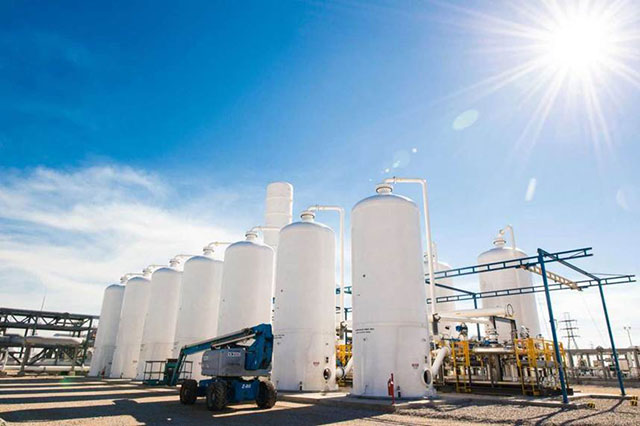
Flexaseal’s first foray into cryogenic sealing solutions was through our Brazil location over 20 years ago. Helio Guida, a managing partner of Flexaseal Engineered Seals and Systems, LLC in Brazil, spent extensive time working with a large cryogenic mechanical seals end-user to identify their sealing challenges and options for a solution.
Formed Bellows Can Create an Unsafe Work Environment
Challenge
The facility used Grofe® cryogenic pumps, which were equipped with formed bellows assemblies. Formed bellows typically have a thicker convolution structure with a high spring rate (the amount of force needed to compress the unit a specified distance.) The higher the spring rate, the higher the unit load and the more heat generated around the seal. While these formed assemblies were suitable for cryogenic operating temperatures as low as -425°F (-253°C), the face load generated unacceptable levels of heat at the sealing faces, affecting the stability of the liquid gases. This was especially concerning when the boiling point for these gases was still well below 0°F (-17.7°C.) The danger when a flammable cryogenic liquid such as liquid hydrogen evaporates, just one liter of liquid can produce approximately 630 to 850 liters of gas. A volume of gas this large can very quickly lead to a flammable atmosphere, threatening personnel and environmental safety.
Replace Formed Bellows with Edge Welded Metal Bellows Component Seals for Cryogenic Pumps
Solution
Flexaseal engineers adapted our successful edge welded bellows design to this challenge. 347 SS, a stabilized stainless steel, was an optimal bellows material due to its strength and durability in extremely cold temperatures. Selecting the right seal face combination was even more critical, and the decision was made to utilize a cryogenic grade of carbon. The self-lubricating carbon material worked in tandem with the tight-toleranced bellows spring rate to alleviate a substantial percentage of the heat generated around the faces during operation.
Pro Tip:
Learn how the versatile and reliable edge welded metal bellows seal can solve the sealing industries most intricate problems with the comprehensive Introduction to
Edge Welded Metal Bellows Seals Guide
Edge Welded Metal Bellows Seal Improves Safety and Productivity
Results
Conversion to the Flexaseal cryogenic mechanical seals design increased MTBF to 6-8 months, which doubled the 3-4 months previously obtained with formed bellows. Because the seals were used in cryogenic gas transportation, the additional months of operation were essential in the continued safe handling of the liquid gases. The facility’s management was so impressed with Flexaseal’s commitment to finding a reliable solution that they worked with the Flexaseal do Brazil personnel to set up a repair/maintenance department within the facility to support ongoing success.
Our Commitment to Cryogenic Mechanical Seal Excellence
Today, Flexaseal Engineered Seals and Systems supplies cryogenic edge welded metal bellows assemblies all over the world. We continue to explore and evaluate the latest cryogenic sealing developments such as non-contacting cryogenic gas seals and labyrinth seal faces in our ongoing commitment to providing the best sealing solutions for your cryogenic challenges.
What is a Hermetic Bellows?
An Air-Tight Assembly critical for many industries
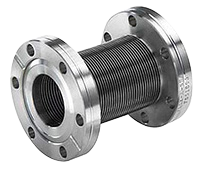 Hermetic seals maintain a positive, impermeable boundary between process systems and unwanted exposure or contamination while still allowing for flexibility, expansion, and contraction in a controlled manner. These air-tight assemblies are ideal for cleanrooms, EPA clean-air regulations compliance, or when personnel safety is necessary.
Hermetic bellows are available in many sizes, different metallurgies for various applications, and are capable of a high range of travel for applications requiring a long stroke. Hermetic bellows effectively seal systems in high-stakes applications where a small leak could endanger personnel, risk companies’ capital, reputations, and future business. When quality and reliability matter, use only the best quality custom designed edge-welded hermetic bellows for every application.
Hermetic seals maintain a positive, impermeable boundary between process systems and unwanted exposure or contamination while still allowing for flexibility, expansion, and contraction in a controlled manner. These air-tight assemblies are ideal for cleanrooms, EPA clean-air regulations compliance, or when personnel safety is necessary.
Hermetic bellows are available in many sizes, different metallurgies for various applications, and are capable of a high range of travel for applications requiring a long stroke. Hermetic bellows effectively seal systems in high-stakes applications where a small leak could endanger personnel, risk companies’ capital, reputations, and future business. When quality and reliability matter, use only the best quality custom designed edge-welded hermetic bellows for every application.
Defining features of Hermetic Bellows
Hermetic bellows are inherently different and offer numerous advantages over traditional mechanical seals. Those advantages include:
- No elastomers to wear or replace; hermetic bellows are relatively maintenance-free and leak-free for many life cycles.
- Hermetic bellows are all-metal, corrosion-resistant materials optimized for each application to keep wetted surfaces in like-new condition at all times.
- Precise linear motion to eliminate column instability or “bellows squirm.”
- Flexaseal’s bellows are leak-tight to a minimum of 1 x 10⁻⁹ cubic centimeters per second (scc/sec.)
- Compact nesting capabilities are inherent to edge-welded hermetic bellows, providing a long cycle life and a wide range of travel.
Typical applications for Hermetic Bellows
Hermetic bellows serve countless applications across many industries. Hermetic bellows offer a reliable and efficient solution whenever a system demands a positive, leak-tight seal in a dynamic environment.
- Filter Dryers – A gas-tight seal is used with CFC and HCFC refrigerant dryers to achieve zero leakage systems.
- Freeze Dryers – Bellows seals are used in vacuum environments to maintain high purity standards.
- Compressors – Bellows seals eliminate leakage past traditional dynamic seals. Bellows seals on compressor valve stems hermetically seal the valve while still allowing for axial movement, maintaining a zero-leakage compressor.
- Volume Compensators – Hermetic bellows devices prevent cavitation by maintaining positive pressure during volume fluctuations.
- Hydraulic or Pneumatic Actuators – Hermetic bellows can act as a piston to convert fluid pressure into linear motion, particularly in high-pressure applications where a dynamic seal could fail or critical systems where any leakage is unacceptable.
- Vibration Dampers – Hermetic bellows are highly effective at isolating vibration.
- Semiconductor and Aerospace Manufacturing – Industries that use ultra-high systems may incorporate manipulators or linear translators, corrosive chemical washes, high-energy plasma etching, wafer production, and intense electromagnetic radiation in their manufacturing processes. Sealed areas and clean rooms can use hermetic equipment to eliminate personal and environmental exposure.
- Hazardous Materials – Hermetic bellows devices provide a positive boundary when handling radioactive material, toxic emissions, and carcinogenic by-products.
- Energy Generation – Hermetic bellows provide a leak-free boundary between process systems in heat exchangers like boilers or condensers and are used as sealing solutions for extreme pressures and temperatures, such as cryogenic applications.
- Pharmaceutical Processing – Hermetic bellows devices are ideal for containing biohazardous material and eliminating micro contamination.
Choosing the best Hermetic Bellows for your project
Specialty edge-welded hermetic bellows seals are ideal for many of the uses described above. Engineers can design customized hermetic bellows to optimize performance for each application. System chemistry requirements may specify different metallurgy, and only top-quality metal alloys should be selected. Hastelloy™, Inconel®, titanium, Monel®, and 347 SS metals are available for use depending on the project.
The best bellows manufacturers feature flexible diaphragms, plates in varying thicknesses, full spring rate testing, and a diverse range of fixtures and end fittings. Fabrication teams and engineers should work together to ensure strict quality control in every process, from stamping sheets of foil stock to pressure-testing the completed assembly.
TIG welding (Tungsten Inert Gas) every joint creates efficient, clean, and long-lasting welds. These edge-welded bellows are vastly superior to less precise formed bellows in their quality and longevity, reducing life-cycle maintenance costs and down-time. Once welded, hermetic bellows should be leak tested with helium tracer gas using a mass spectrometer to ensure every seal is completely leak-free before delivery to the user.