

Introduction: High Stakes in a Demanding Environment
Not all mechanical seal challenges are made equal. Some happen in controlled industrial facilities with easy access to parts, personnel, and equipment. Others happen deep in the Ecuadorian Amazon, where the only way in or out is by river barge, and where a single pump going offline can have a devastating impact on production.
That was the situation at the Pañacocha oil field, part of a large oil production company running more than 500,000 barrels per day (bpd) across multiple sites in Ecuador. When the company’s existing seal support system proved inadequate for the demands of multiphase pumping, they needed a partner with the engineering depth and field presence to get it right. They called Flexaseal.
The Problem: A Lubrication System That Couldn’t Keep Up
The Pañacocha field pumps crude to the surface as a multiphase mixture of crude oil of varying weights, producing water, natural gas, and fine abrasive solids. Positive displacement twin-screw pumps (Bornemann MW-335s) handle the job precisely because they can withstand the hydraulic hammers, dry-running events, and abrasive content that would destroy centrifugal equipment. Each of those pumps is equipped with four mechanical seals, and a single seal failure can turn into a serious and costly maintenance event.
The field operates three of these pumps, and at least two must run at all times to keep the pipeline moving. The original lubrication setup, which consisted of two vertically mounted tanks operating on a thermo-siphon principle, was an API Plan 62 arrangement suited to single, non-pressurized seals. This setup led to a series of reliability problems:
- Inconsistent seal lubrication: The API Plan 62 used a thermo-siphon effect as a low-cost alternative to a double seal to attempt to improve conditions on the low pressure side of the process seal, pairing a reliable inboard seal with an outboard lip seal that wore over time, causing excessive leakage and loss of lubrication to the inboard seal. Without a stable lubricating film, a non-negotiable requirement in hydrocarbon service, failures were commonplace.
- Unpredictable dry-running events: Slugs of gas passing periodically through the pump would result in damage to the mechanical seal faces and, ultimately, seal failure.
- Costly and time-consuming outages: Since parts and personnel must travel to the site by boat, a single outage could lead to significant downtime and unacceptable opportunity costs. With limited on-site storage capacity, a pump shutdown could also force a well shutdown.
The end user had already experimented with alternatives from the original seal manufacturer without satisfactory results, which made clear that it needed to take a fundamentally different approach.
The Solution: Flexaseal Style RKCMD With API Plan 54
Flexaseal already had a strong relationship with the end user as a reliable supplier to their other fields. Combined with our reputation as a specialist in replacing and upgrading competitors’ seals, this made us the natural choice to propose a better solution. After conducting in-depth interviews with site personnel to understand their operating practices and logistical constraints, our engineering team specified a two-part solution:
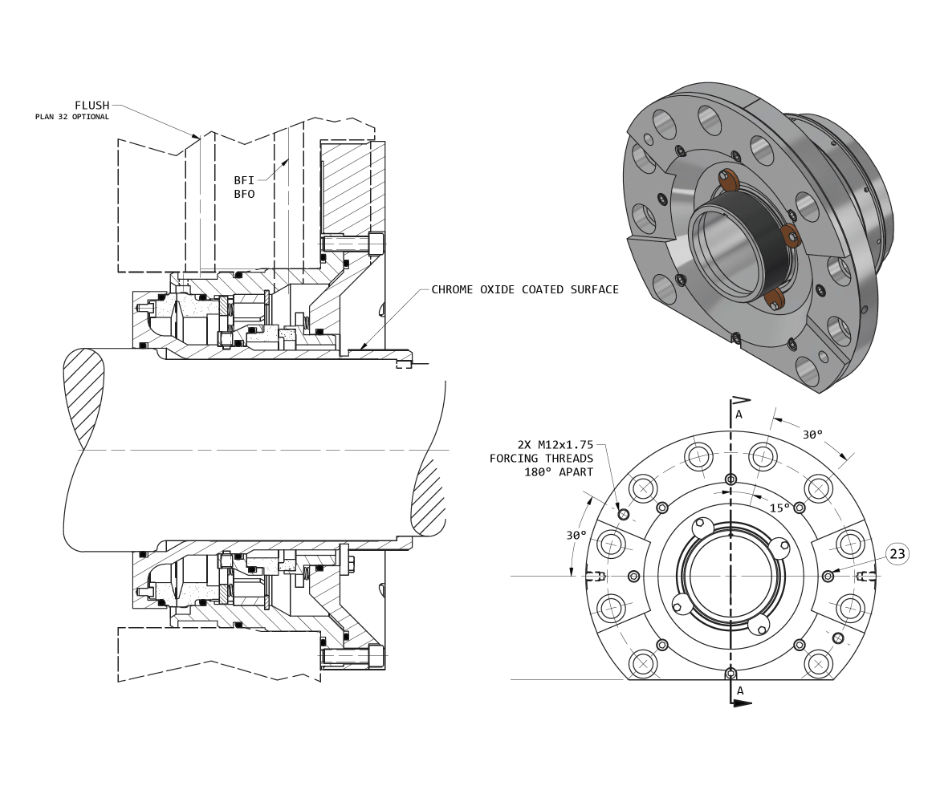
- Flexaseal Style RKCMD Tandem Stationary Multi-Spring Cartridge Slurry Seal: The end user selected the RKCMD for its robust construction and ability to handle the application’s aggressive and varying solids content. The inboard seal’s double-balanced design ensures stability in the event of pressure reversal. The RKCMD delivers equivalent strength and reliability at both the inboard and outboard positions, directly addressing the weakness in the original configuration.
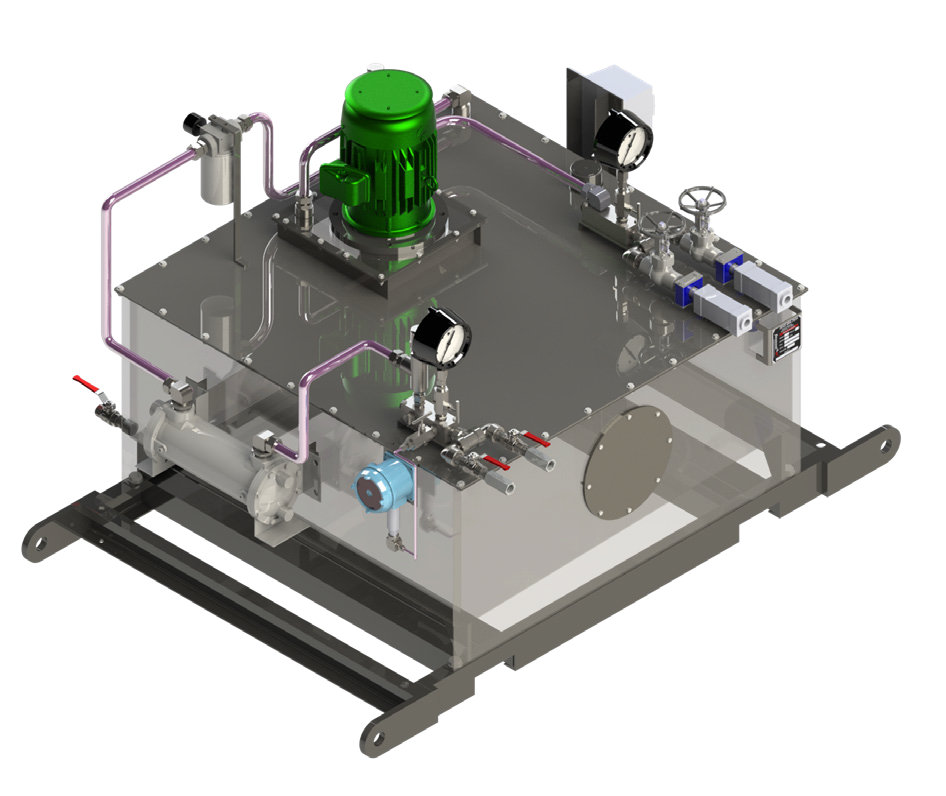
- API 682 Plan 54 Forced Lubrication Support System: Plan 54 replaced the passive thermo-siphon arrangement with an active, pressurized barrier fluid circuit that continuously maintains a stable film at both seal faces. For an application where dry running had been a recurring concern, addressing the lubrication problem at the source was an essential design decision.
Significant engineering time went into both the seal design and the support system to ensure full compatibility with the Bornemann MW-335 pumps.
Implementation and Results: Commissioned in the Field, Proven Over Time
Eight weeks from order to delivery is a demanding timeline for a custom-engineered system. Meeting it required coordinated effort across Flexaseal’s engineering, manufacturing, and logistics teams, as well as the on-the-ground work of Flexaseal’s Ecuador distributors, whose local expertise and hands-on presence proved essential throughout the project.
Commissioning in the Amazon introduced logistical variables that no project plan could fully anticipate. Equipment arrived by river barge, and scheduling a crane barge around fluctuating river levels added complexity to the installation timeline. The Flexaseal team was on site to work through those constraints and successfully completed commissioning.
Since August 2024, all three pumps at the Pañacocha field have run continuously without failure or deviation from design parameters. Key outcomes include:
- Oil reservoir refills have remained consistent with Flexaseal’s design projections, confirming that the seals are performing as intended and require no additional lubrication outside of normal operating practices.
- Mean time between repairs has approximately doubled compared to the previous average of around one year, with further improvements anticipated as the system continues to run.
- Reactive maintenance on these pumps has been effectively eliminated, freeing site personnel to redirect their attention to other maintenance priorities, including neighboring fields.
The Impact: Greater Reliability and Confidence
Beyond operational improvements, operators who previously managed under the constant pressure of potential pump loss now have a system they can rely on, and on-site personnel now report higher confidence in pump uptime.
The success of this installation has also given field managers and company leadership the direct operational evidence they needed to justify broader investment. Pressurized dual seal arrangements with Plan 54 support systems have historically been uncommon across the end user’s production fields, but that’s beginning to change. The company is now planning to extend the same approach to more than two or three additional fields, with MTBR improvement as the stated goal across other sets of critical pumps.
Conclusion: Engineering That Holds Up Where It Counts
Beyond the right seal specification, the Pañacocha project required a thorough understanding of a demanding application, a support system designed to address the actual failure mode, logistics collaboration across a remote and logistically complex environment, and the field presence to see commissioning through to completion. Flexaseal’s Style RKCMD seal and API Plan 54 support system delivers on every dimension: performance, reliability, and long-term serviceability in one of the most operationally demanding environments imaginable.
Facing a Difficult Seal Application?
Flexaseal engineers solutions for the most demanding conditions in oil and gas. Check out our solutions to find the ideal one for your application.
