

Case Study: Style 78 HTX – Cryogenic Propane Vertical Pump
Solving Icing Challenges: Sealing Low-Temperature Light Hydrocarbons
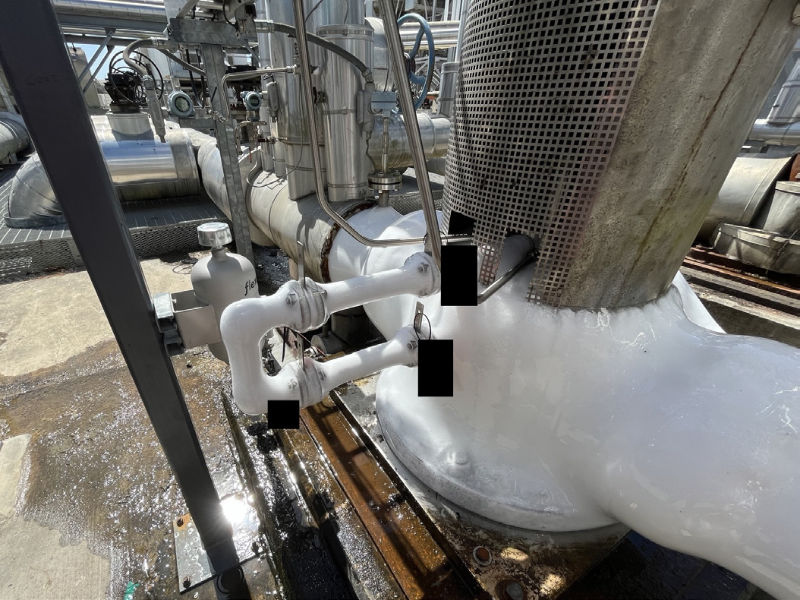
Equipment: Three-Stage Vertical Pump
Application: Low-temperature product, high-humidity ambient environment
Mechanical Seal: 2-3/16” Style 78 HTX, Tandem Welded Metal Bellows, Carbon vs. Silicon Carbide Faces, 316SS Construction, Graphoil Secondary Seals, Low-Temp Fluorosilicone O-rings, Magnetic Bearing Isolator
Support System: API 682 Plan 14 (flush), Plan 52 (unpressurized buffer fluid), Plan 65A (leakage collection/monitoring)
Temperature: -58 °F (-50 °C)
Viscosity: 0.46 cP
Specific Gravity: 0.51
Pressure: Suction: 0 psig (0 bar)
Discharge: 600 psig (41.4 bar)
Speed: 700-1,800 RPM
Product: Cryogenic Propane
Industry: Oil & Gas Processing
Background
A gas processing facility experienced frequent startup failures on a vertical pump with a low temperature propane process fluid. The incumbent gas pusher seal utilized a dynamic O-ring that stiffened from exposure to cryogenic temperatures, leading to leakage and early failure. Prior to Flexaseal’s involvement the site averaged more than 11 seal failures per year, including 14 in 2022.
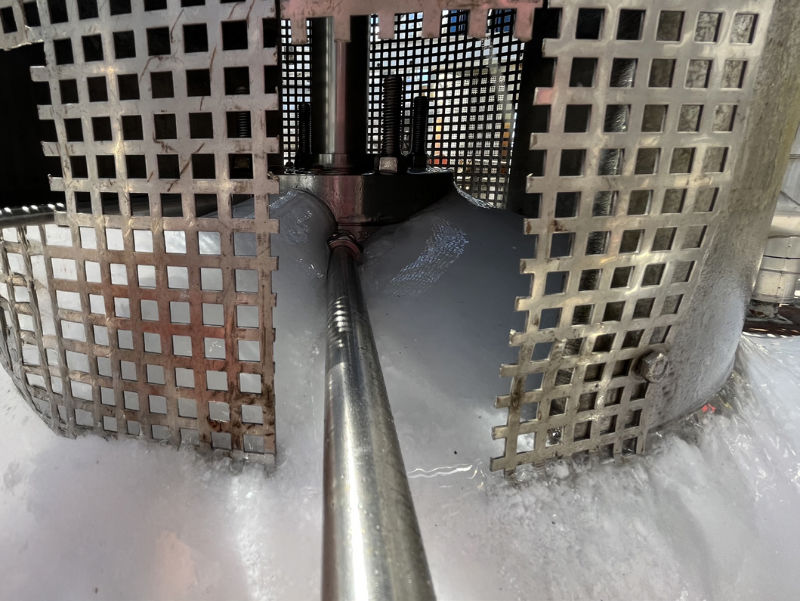
Mechanical Seal Installed in the Pump
The Challenge
- Low-temperature elastomer behavior: The pusher seal’s dynamic O-ring approached its glass-transition region during cold starts, causing stick-slip and poor face tracking.
- Environmental icing: During idle periods, humid ambient air condensed and froze in and around the outboard seal; the expanding ice cracked the seal faces.
- Light hydrocarbon film control: With propane at 0.46 cP and near its vapor pressure, any instability resulting in a face temperature spike or vapor entrapment risks flashing and loss of lubrication.
- Objective: Remove the dynamic O-ring failure mode, exclude ambient moisture during start/stop, and stabilize the seal chamber thermally and hydraulically.
Pump Housing with Ice Accumulation
The Solution
Seal Hardware and Materials
- Style 78 HTX is a tandem, rotating welded metal bellows seal, so designed to eliminate dynamic O-rings and withstand low temperatures with self-cleaning capability.
- Carbon vs. silicon carbide seal faces for low-viscosity hydrocarbon duty; 316 SS construction; flexible graphite secondary seals for cryo-capable compliance; FVMQ O-rings at static joints for elasticity below −50 °C.
- Magnetic bearing isolator outboard to block the ingress of condensation and prevent icing within the seal.
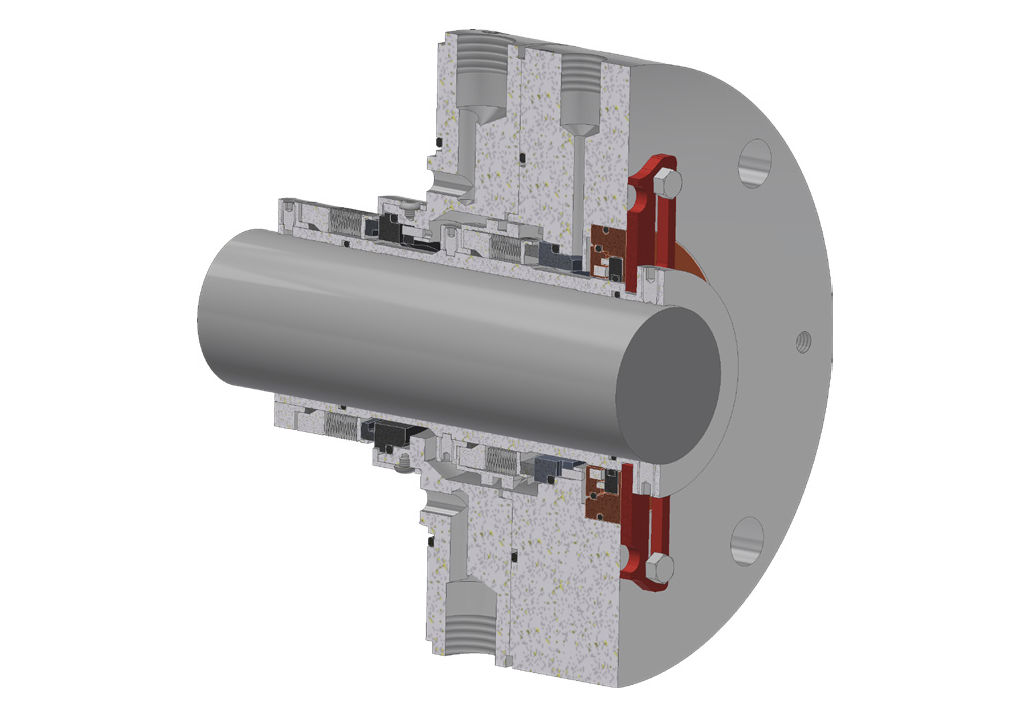
Style 78 HTX High-Temperature Tandem Rotating Bellows Seal with Magnetic Outboard Containment
API 682 Piping Plans
- Plan 14 (process flush across the seal chamber): Controlled circulation from pump discharge to the seal chamber with return to suction. Sized to maintain a pressure margin over propane vapor pressure at the faces, purge any entrained vapor, and cool the seal faces without introducing external contaminants.
- Plan 52 (unpressurized buffer for the outboard/containment seal): A dedicated reservoir with low-pour-point synthetic buffer fluid (pour point ≤ −60 °C), circulated by the seal’s pumping ring through a cooler/fin tube as required. Reservoir pressure maintained 0.5–1.0 bar below seal chamber pressure to ensure inward leakage across the outboard faces under upset, lubricating and cooling the containment stage and adding thermal mass during intermittent operation.
- Plan 65A (leakage collection and monitoring to atmosphere): A small, heat-traced collection vessel with level switch connected to the outboard gland leakage port located between the outboard seal and the magnetic isolator. Provides positive indication of abnormal leakage past the containment seal while keeping the area clean and allowing EHS logging. Under normal operation, accumulation is negligible; any trend flags containment distress before emissions.
Procedural Controls
- Revised cold-start/idle procedure emphasizing buffer level/pressure verification (Plan 52), flush verification (Plan 14 differential), and ensuring Plan 65A is empty/reset before startup.
The Result
- Failure modes addressed: Dynamic O-ring–related failures eliminated; outboard icing effectively prevented with magnetic bearing isolator.
- Hydraulic/thermal stability: Plan 14 cools inboard seal faces, vents the seal chamber, and maintains seal chamber conditions above vapor pressure, preventing flashing and ensuring a stable fluid film in a light hydrocarbon.
- Operational impact: Fewer interventions, smoother cold starts, reduced unplanned downtime, and stable leakage control.
- Documented reliability gain: Failures reduced from 14 (2022) to 2 (2023).
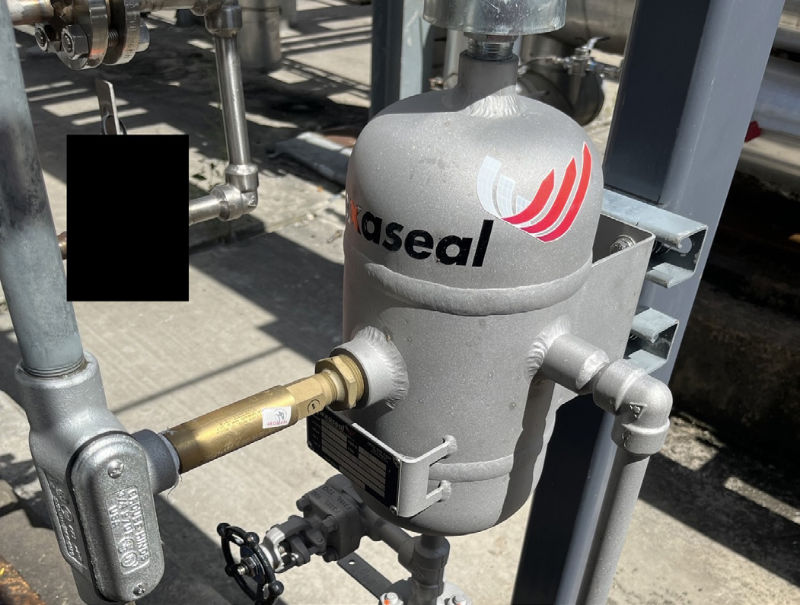
API Plan 65A Reservoir
KPI Snapshot
| Metric | Before | After | Change |
|---|---|---|---|
| Seal Repairs per Year | 14 (2022) | 2 (2023) | -86% |
| MTBR (proxy, days) | ~26 | ~183 | ~7x |
The Conclusion
Integrating a tandem, welded metal bellows wet seal with an outboard magnetic bearing isolator and the combined Plan 14 / Plan 52 / Plan 65A architecture addressed the root failure causes – low-temperature elastomer limitations, moisture-driven icing, and light-hydrocarbon film instability. The site achieved an 86% reduction in annual seal replacements and an estimated 7× improvement in MTBR, with added EHS assurance from Plan 65A trend monitoring. The configuration is directly transferable to similar light-hydrocarbon, low-temperature, intermittent services where ambient humidity is a reliability threat.